Ferrara is a city to discover slowly, among squares, palaces and streets that still hold the charm of the Renaissance. Together with its Po Delta it is a UNESCO World Heritage Site, partly because it has kept almost intact the layout of a city planned in the Renaissance: an orderly, harmonious city, the so-called “ideal city”.
It is also the city of bicycles, and as you stroll around you soon see why: bicycles everywhere and lots of cycle paths. For me too, in my wheelchair with the Triride All Road, it was a pleasure to explore, with a centre that, in our experience, turned out to be very accessible.
Setting off and parking
We left San Giovanni Valdarno at 8:30 and, once in Ferrara, left the car at the Rampari di San Rocco car park.
Accessibility · Parking
I chose this car park because it is just outside the ZTL (the limited traffic zone of the historic centre) and costs only 2 euros for the whole day. As I had no reliable information on whether parking might be free for those displaying a disabled badge, and given how little it cost, I preferred to pay the two euros and enjoy the visit without worrying. From here we carried on towards the centre, with me in my wheelchair and the Triride.
That was how our day discovering Ferrara began, with a guided tour of Palazzo Schifanoia booked for 4 pm.
Piazza Trento e Trieste and the Cathedral
From the car park we followed the easy cycle path all the way to Piazza Trento e Trieste, one of Ferrara’s most representative spaces. Between the Cathedral of San Giorgio and the historic palaces, we found ourselves in the heart of the city.
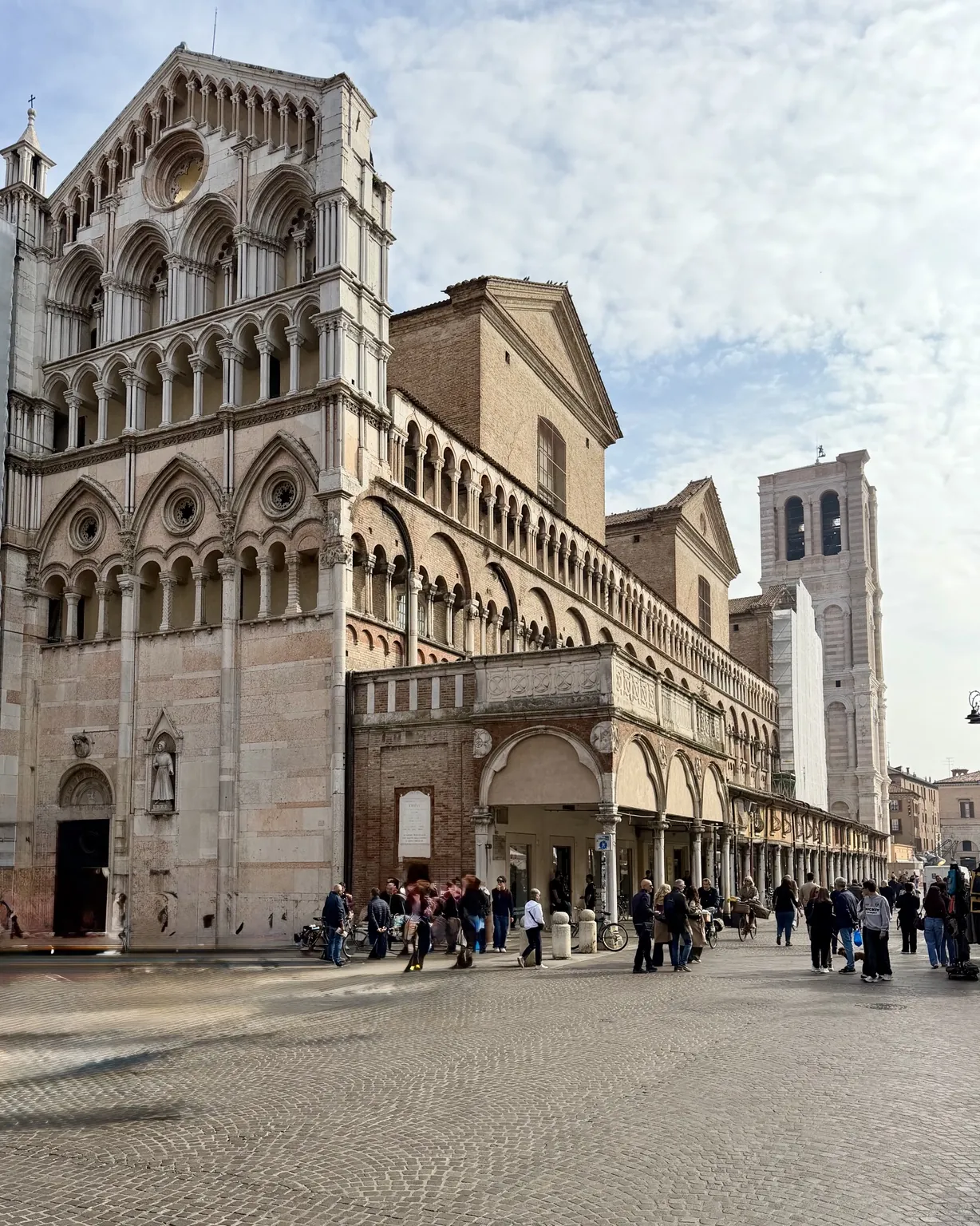
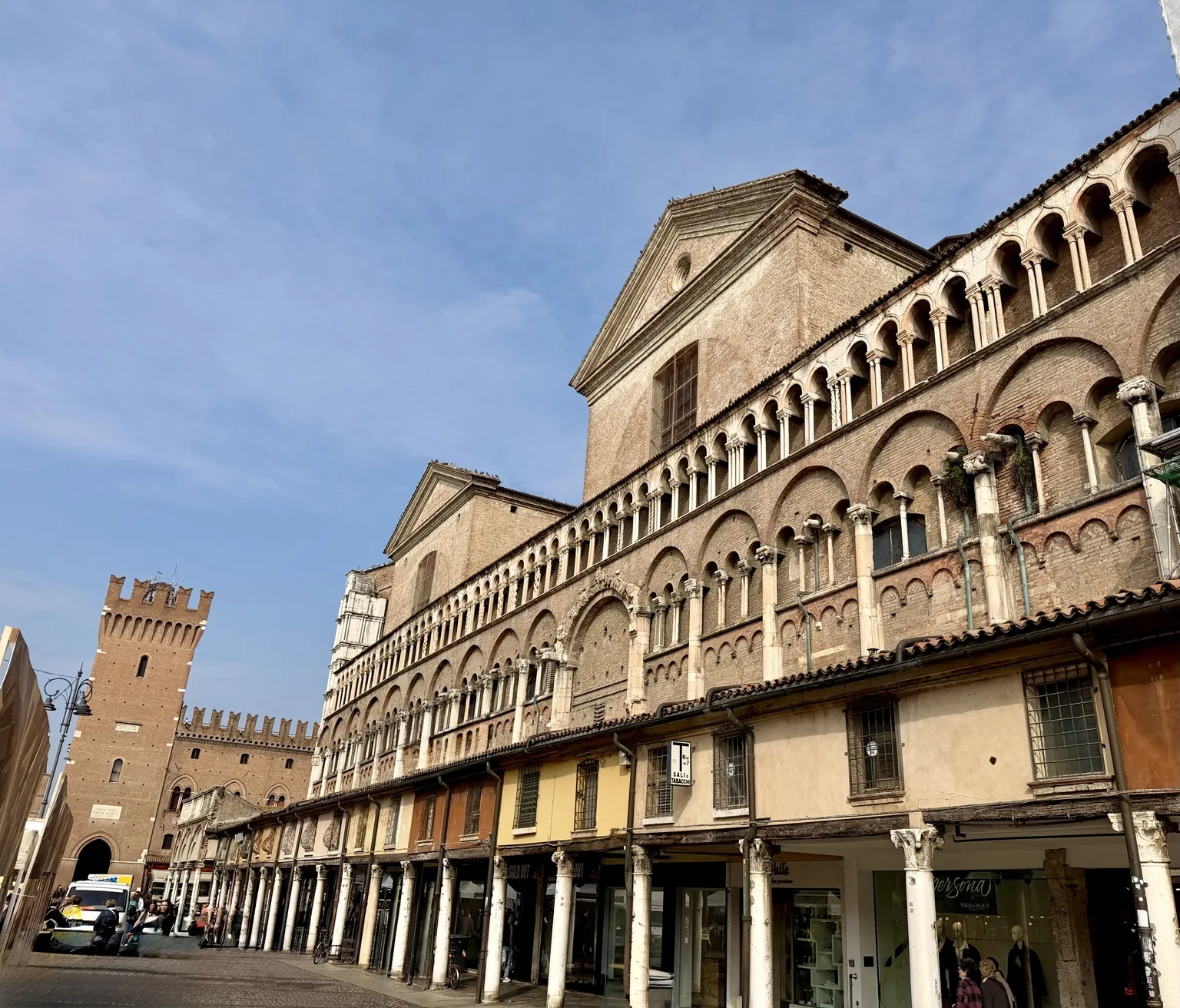
We admired the Cathedral from the outside, stopping also at the Loggia dei Merciai, the merchants’ loggia that runs along the side of the church facing the square. The shops built against the Cathedral tell of a Ferrara where everyday life and religious life were intertwined for centuries.
Piazza Municipale and the old ducal residence
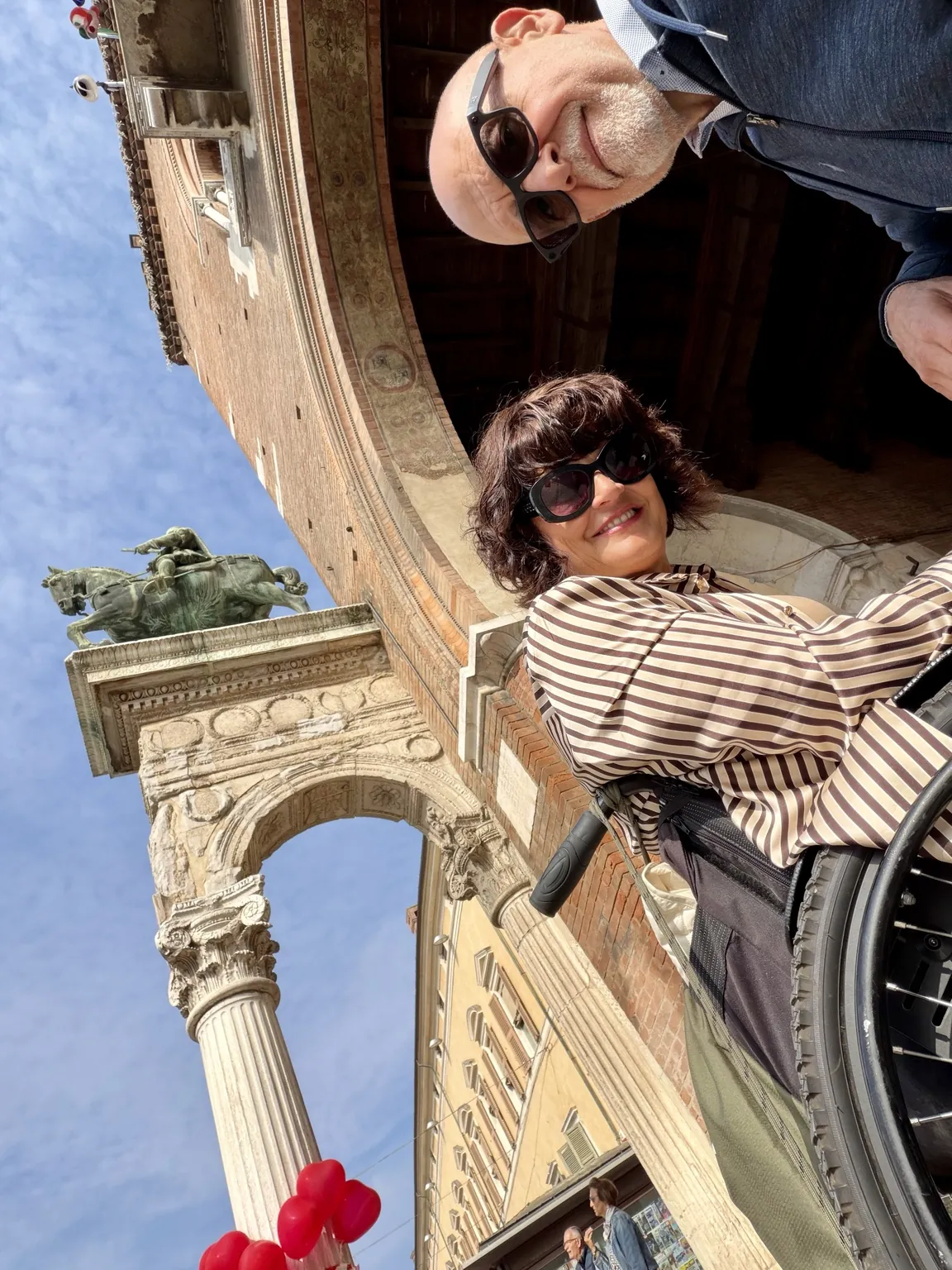
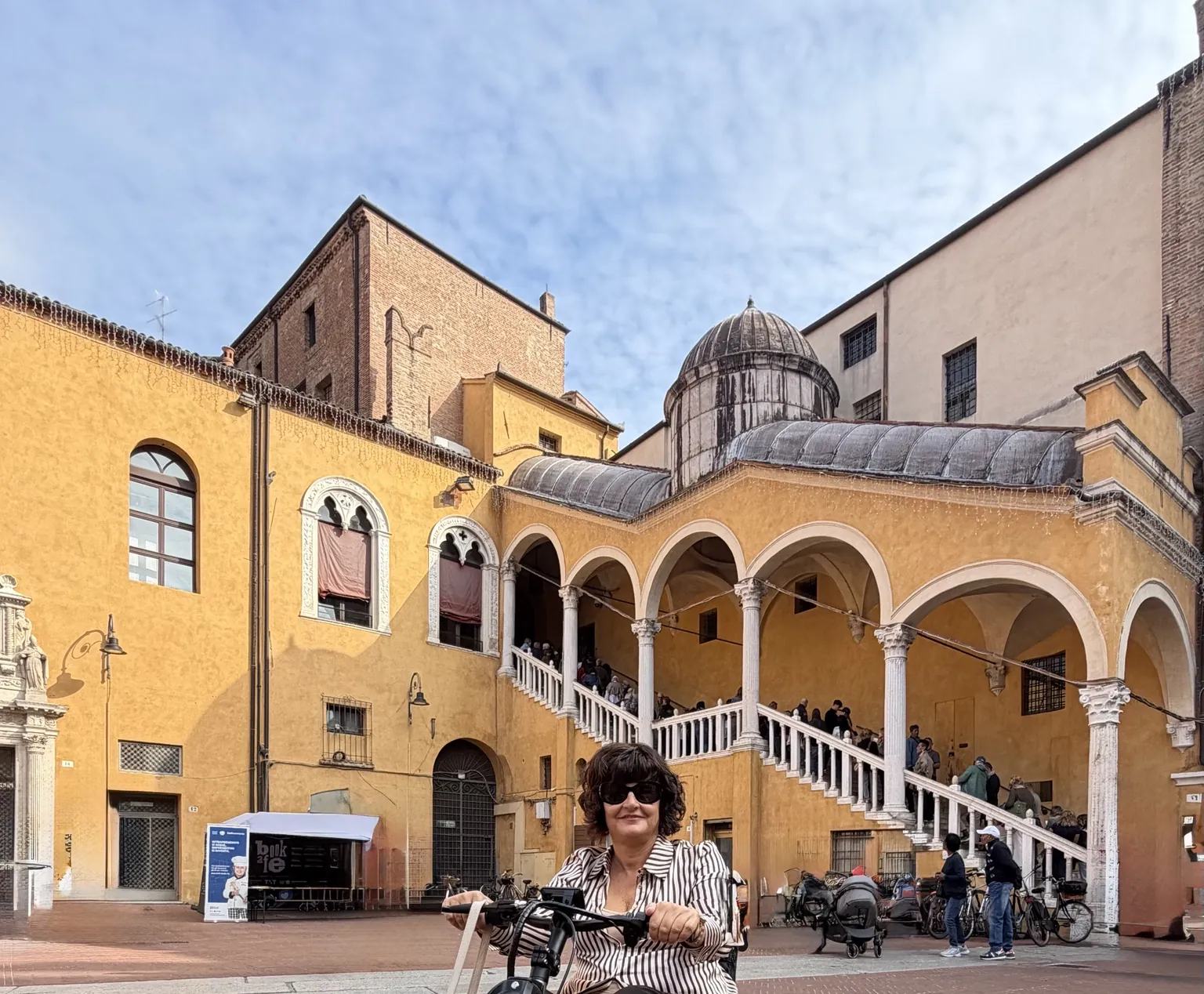
We then reached Piazza Municipale, the old courtyard of the Palazzo Ducale, now the Town Hall. Passing through the Volto del Cavallo, an archway, you enter an enclosed space, quite different from the wide square in front of the Cathedral.
Here we looked at the monumental staircase, whose elegant lines recall Ferrara’s past as the city of the Este family. Even without visiting the interiors, this stop lets you grasp the link between the palaces of the centre and the history of the court.
Castello Estense and the Rotonda Foschini
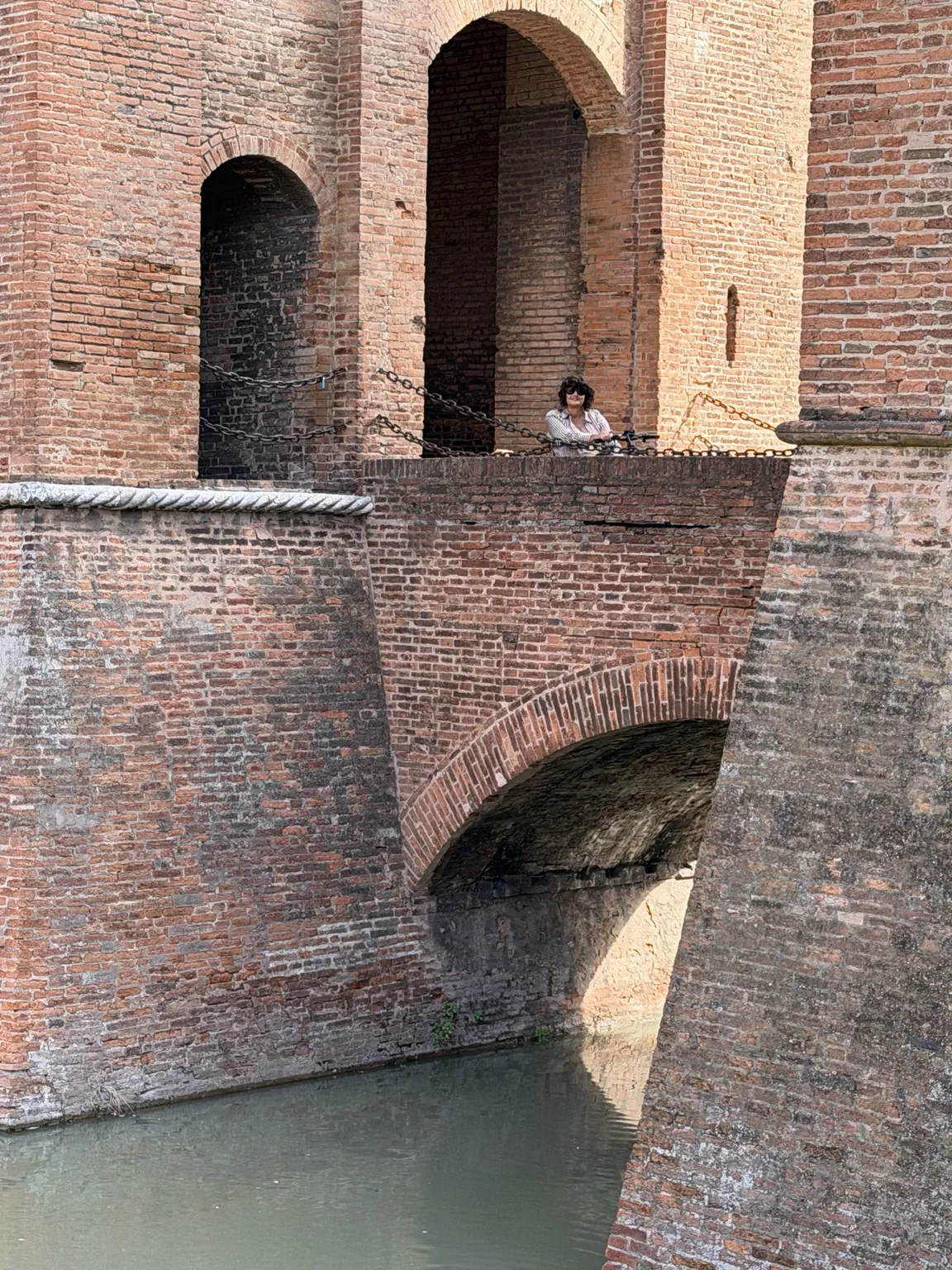
The morning went on towards Castello Estense. We admired it from the outside: its towers, moat and drawbridges make it an unmistakable presence in the centre of the city.
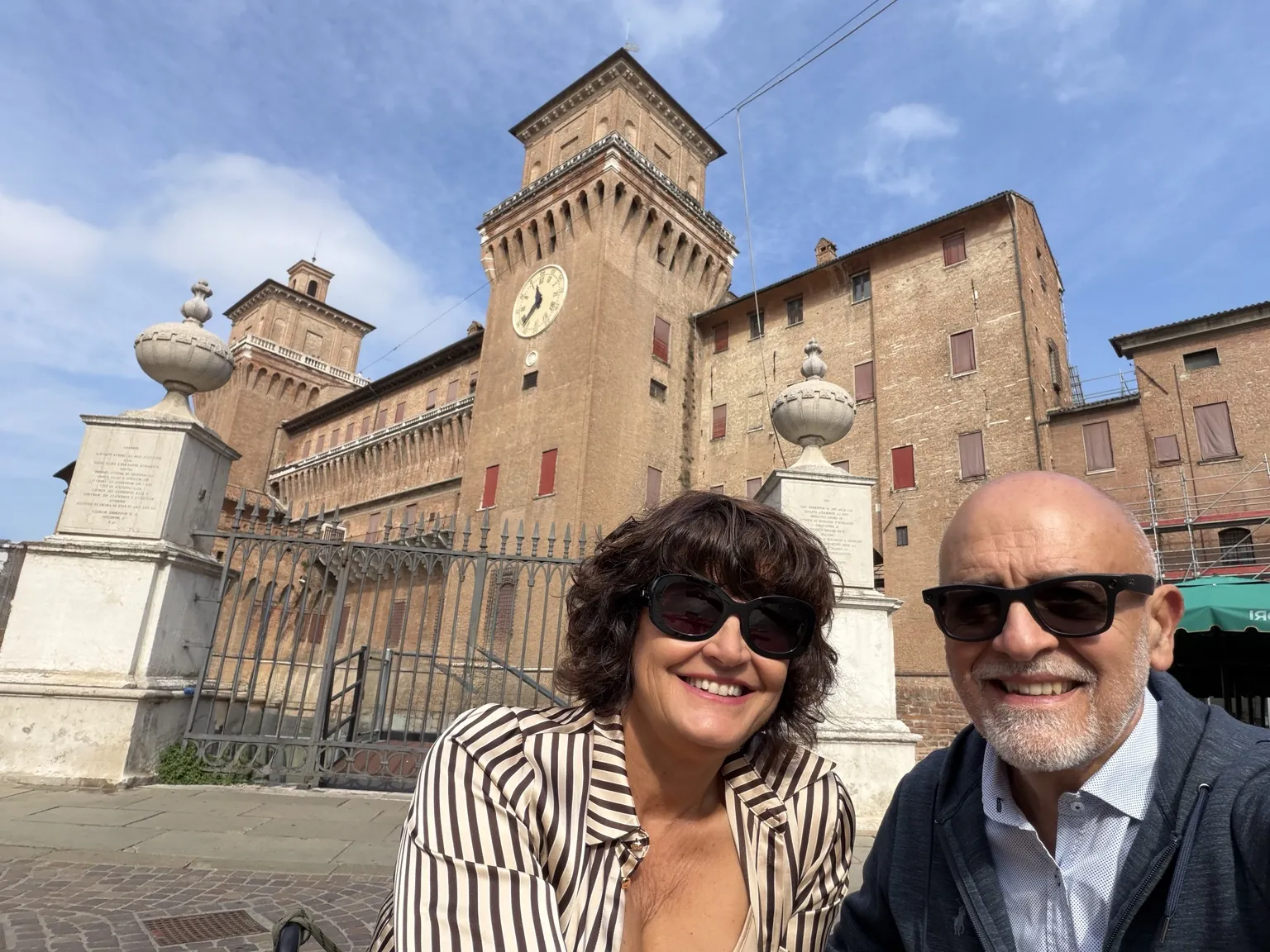
The castle was built in 1385 at the behest of Niccolò II d’Este, after a violent popular revolt sparked by taxes. It was meant to give the family and the court a safe refuge in case of new uprisings and to tighten control over the city. The moat, the towers and the drawbridges still tell of this original defensive role.
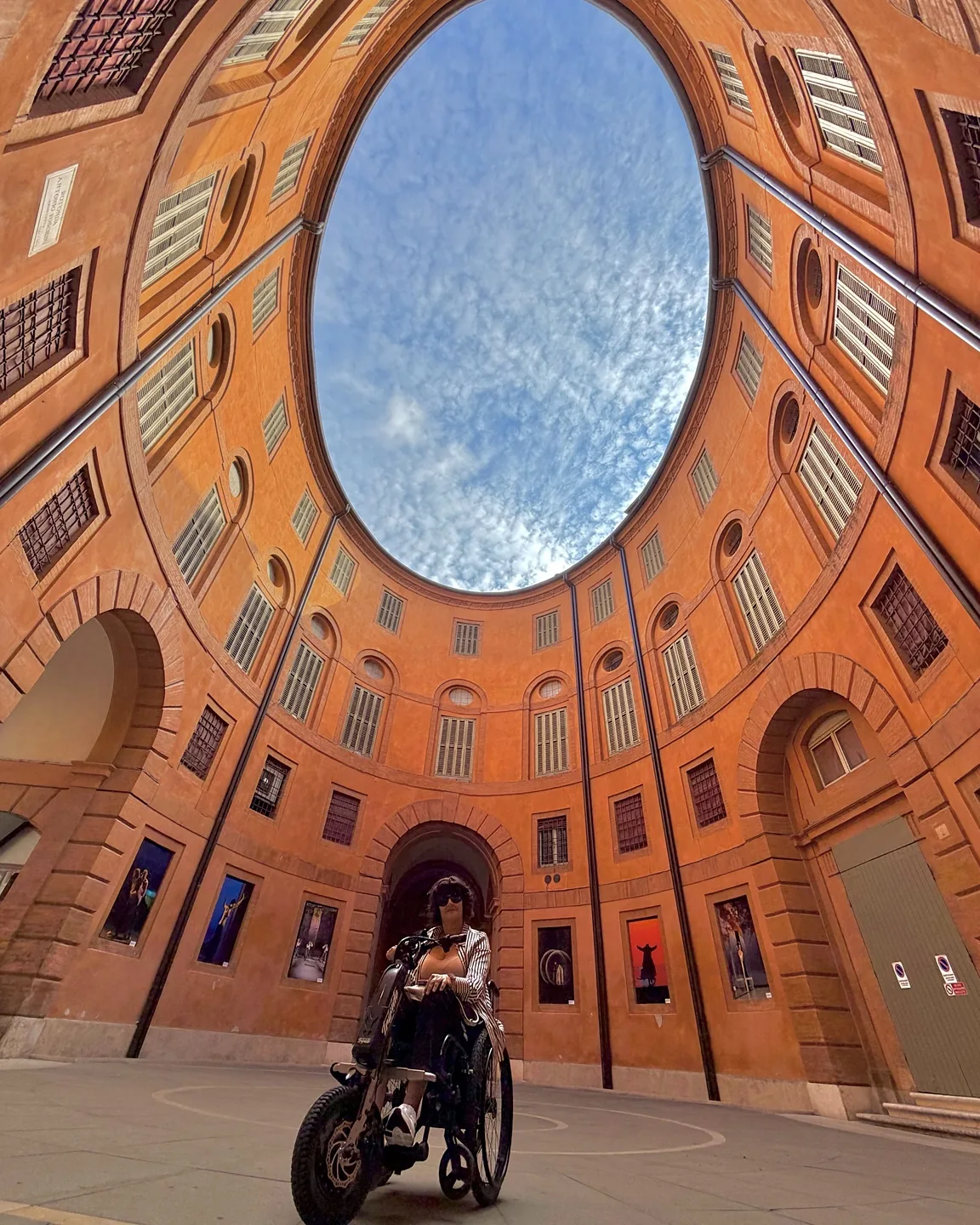
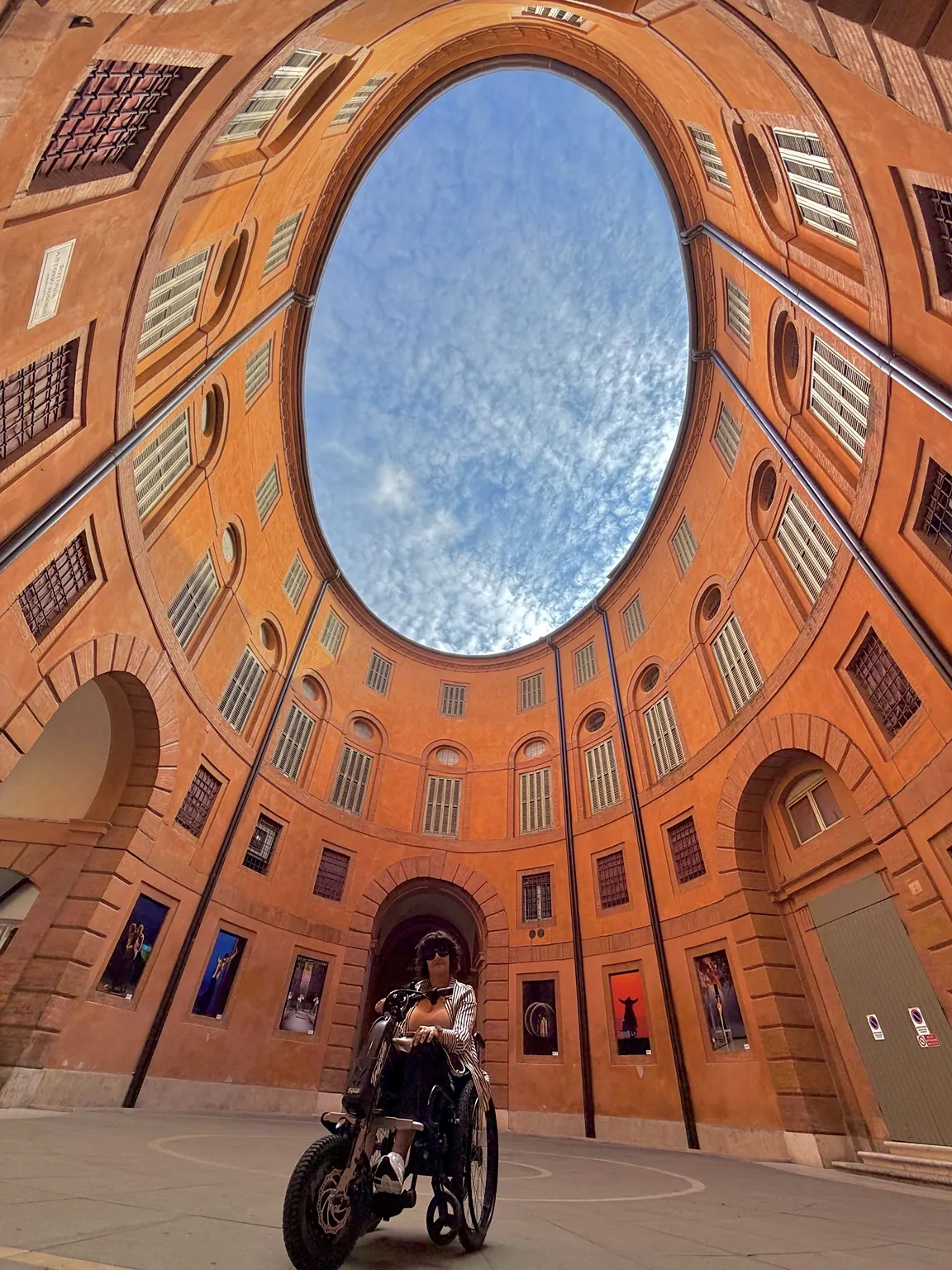
We also stopped at the Rotonda Foschini, the oval space of the Teatro Comunale. A short stop, worth enjoying by looking up too, to appreciate the lines of the architecture.
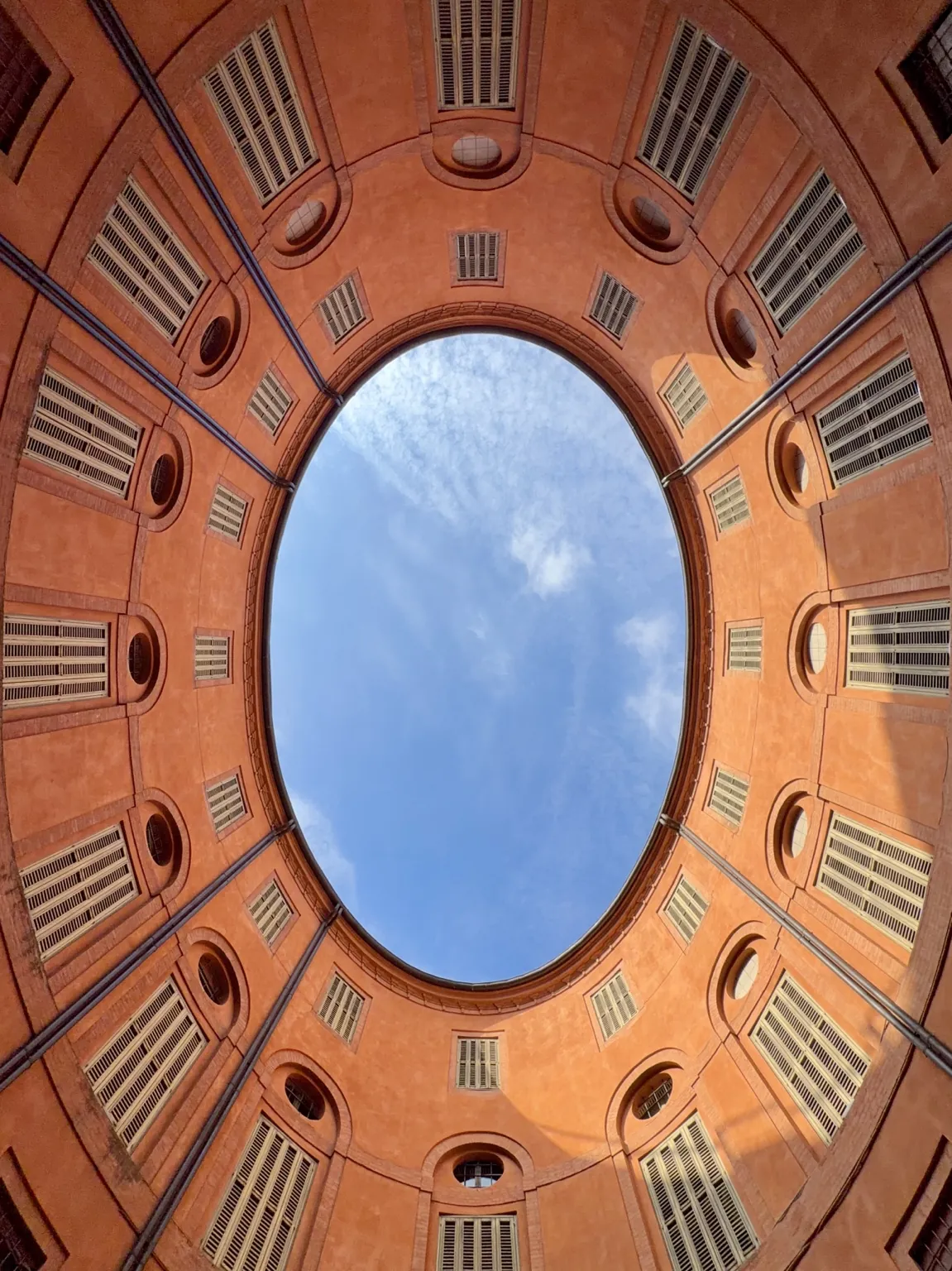
Accessibility · Getting around the centre
From the car park to the old town we followed an easy cycle path. Once in the centre, getting around in my wheelchair with the Triride was pleasant and trouble-free, helped also by the fact that traffic is restricted to authorised vehicles only.
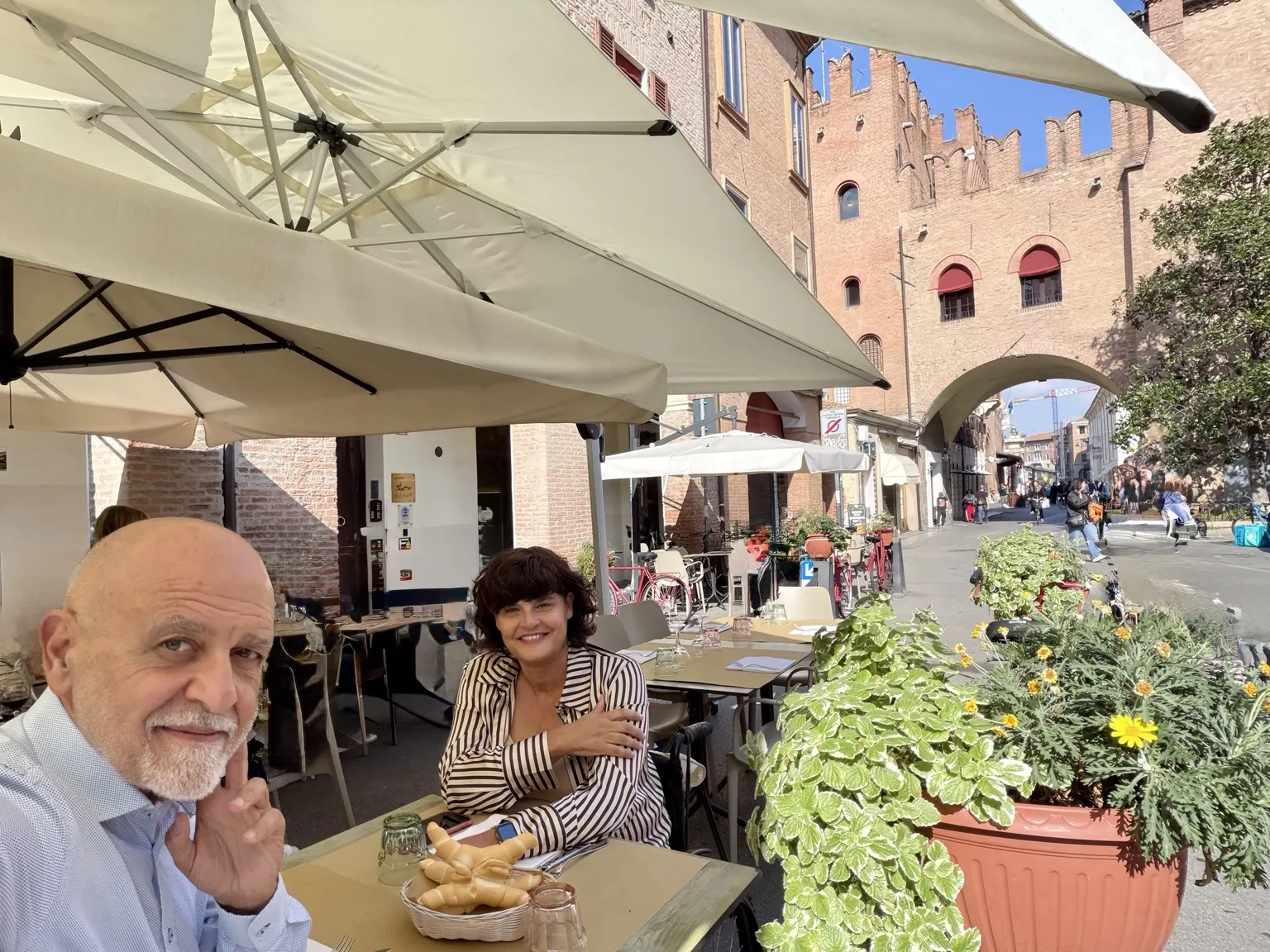
Lunch at Cusina e Butega
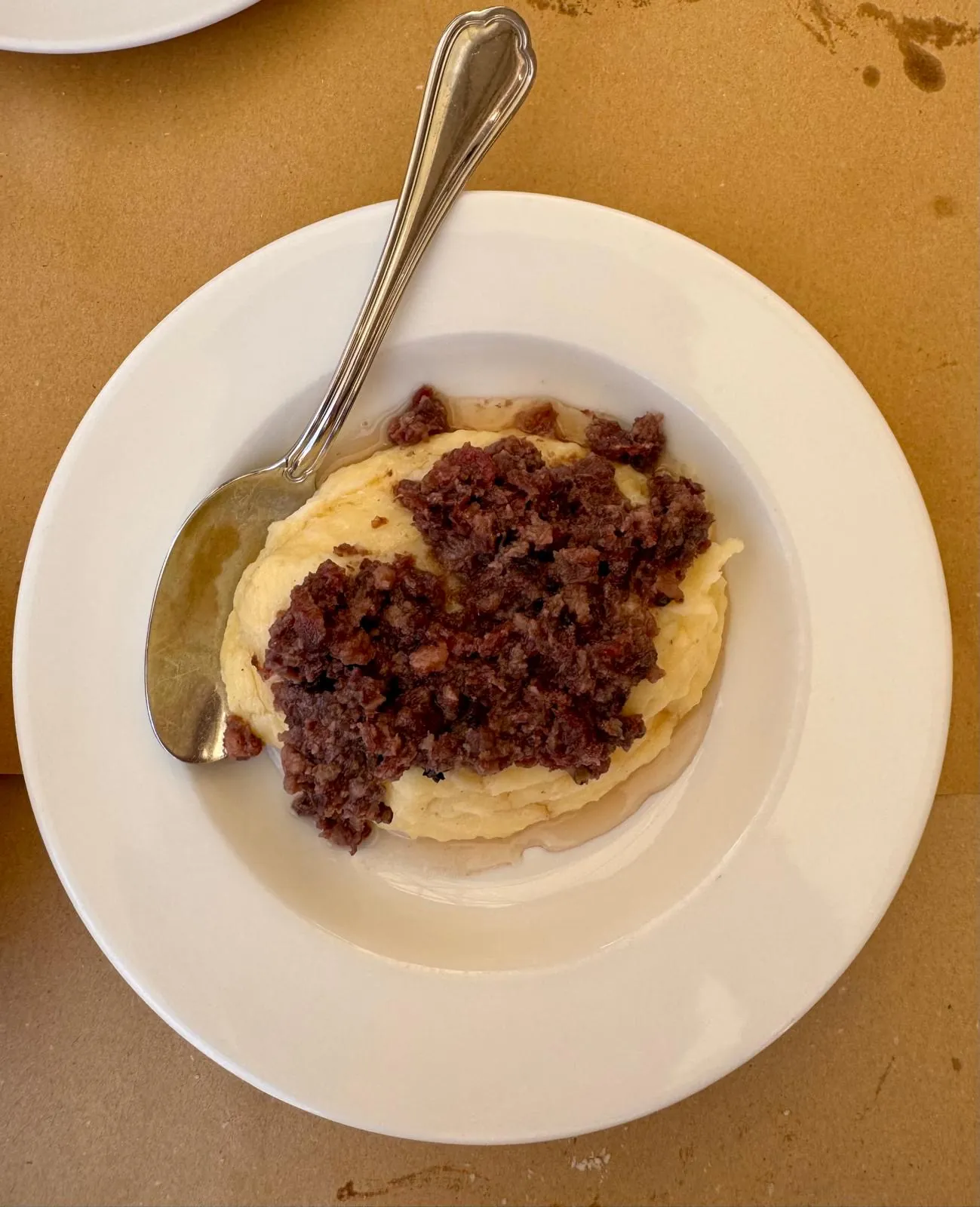
For lunch we stopped at Cusina e Butega, where we tried some specialities of Ferrara’s cooking: some excellent cappellacci di zucca (pumpkin-filled pasta) with knife-cut ragù and salamina da sugo, Ferrara’s slow-cooked spiced pork sausage, with mashed potatoes. A tasty break devoted to local flavours, before setting off again on our walk.
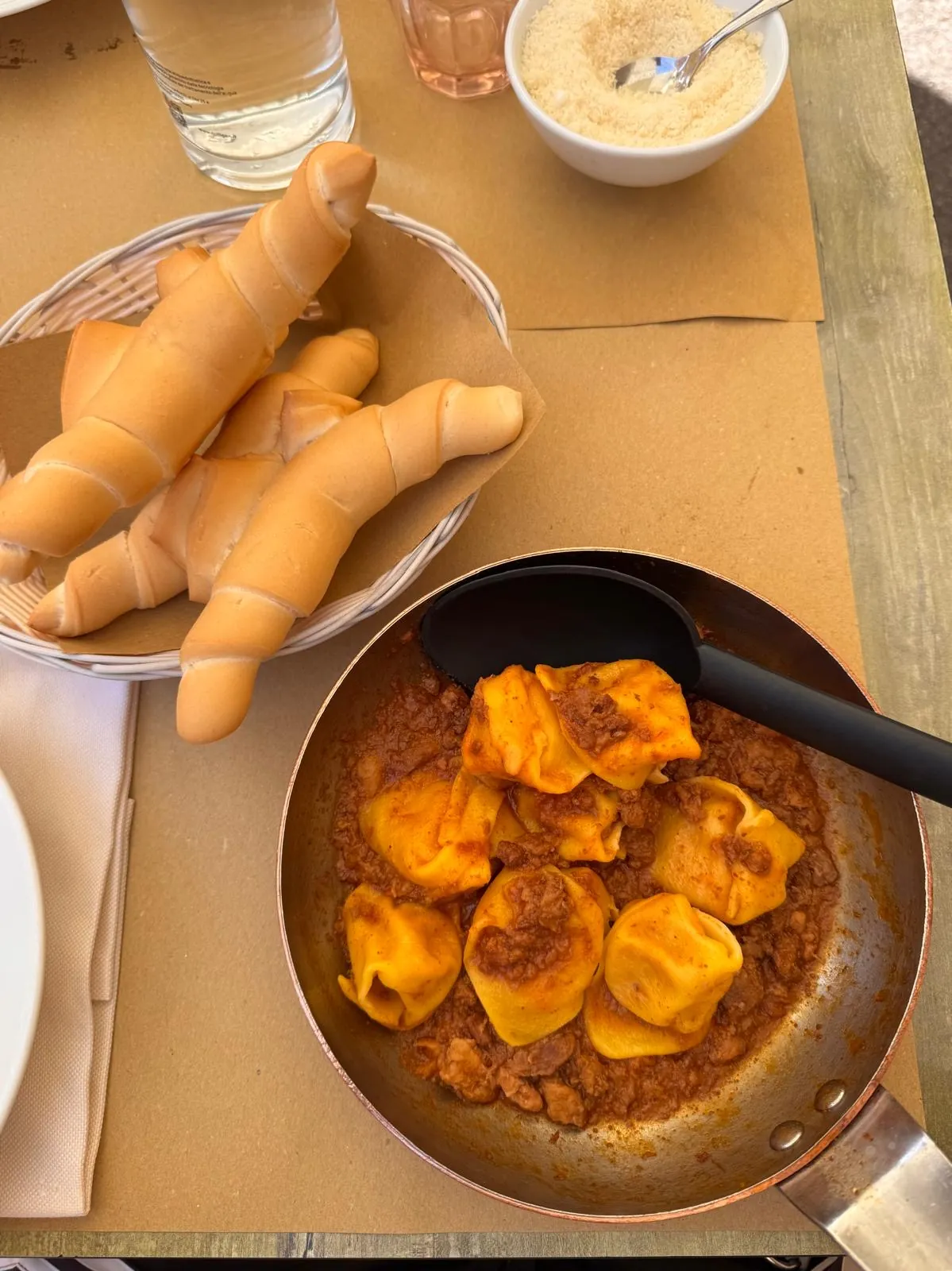
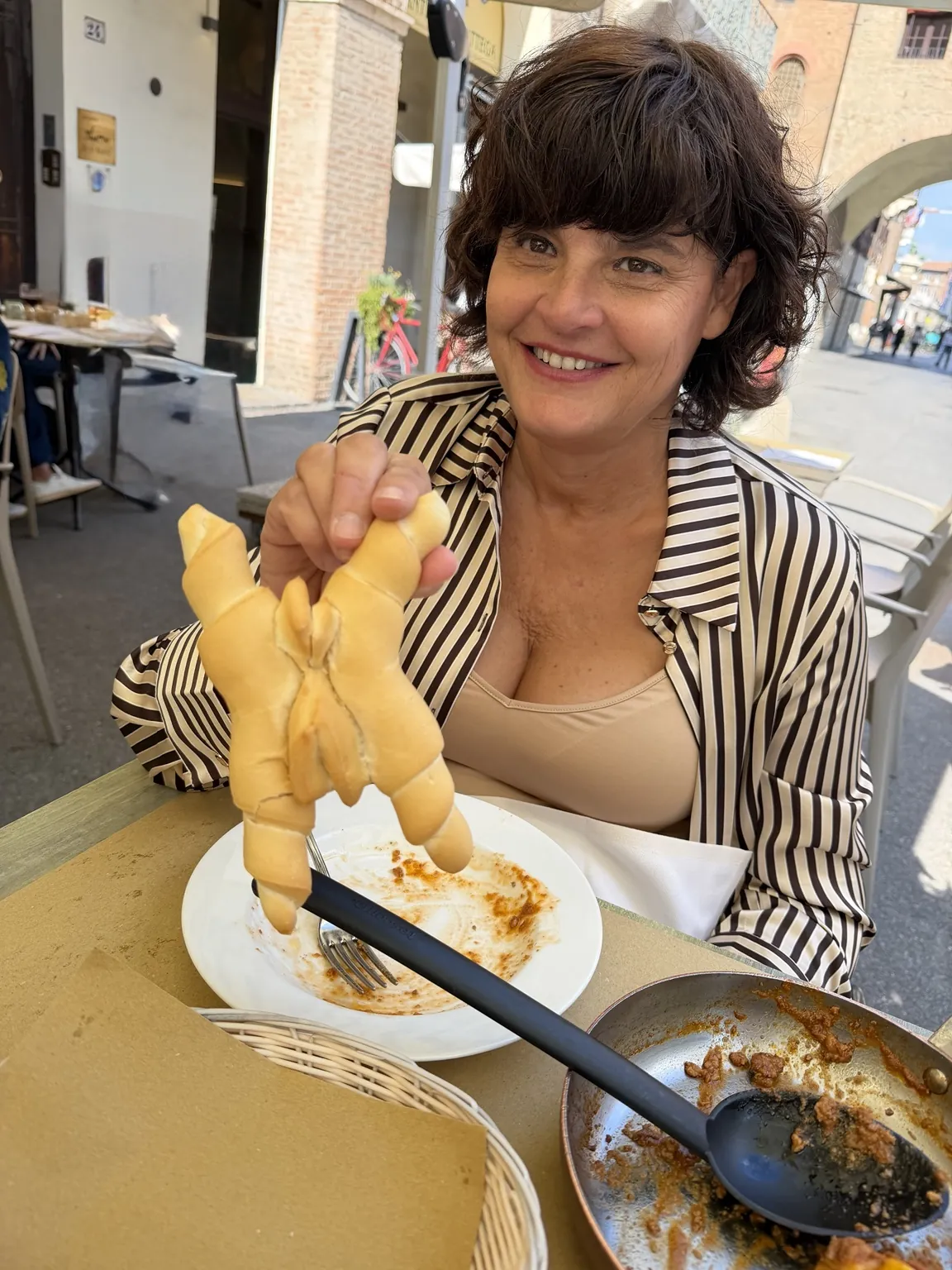
The local bread is the Coppia Ferrarese (in dialect ciopa or ciupeta), a cross-shaped bread with twisted ends that has had PGI status (IGP) since 2001. According to legend, its twisted shape is a tribute to the blonde curls of Lucrezia Borgia, wife of Alfonso I d’Este. A little curiosity that brings some of the history and charm of the Este court to the table as well.
Accessibility · Toilet
At Cusina e Butega I personally checked that there is an accessible toilet.
Via delle Volte, in medieval Ferrara
In the afternoon we went along Via delle Volte, one of the most evocative streets in the city. Brick arches and raised passageways link the buildings, creating a series of views that invite you to stop, look and take photos.
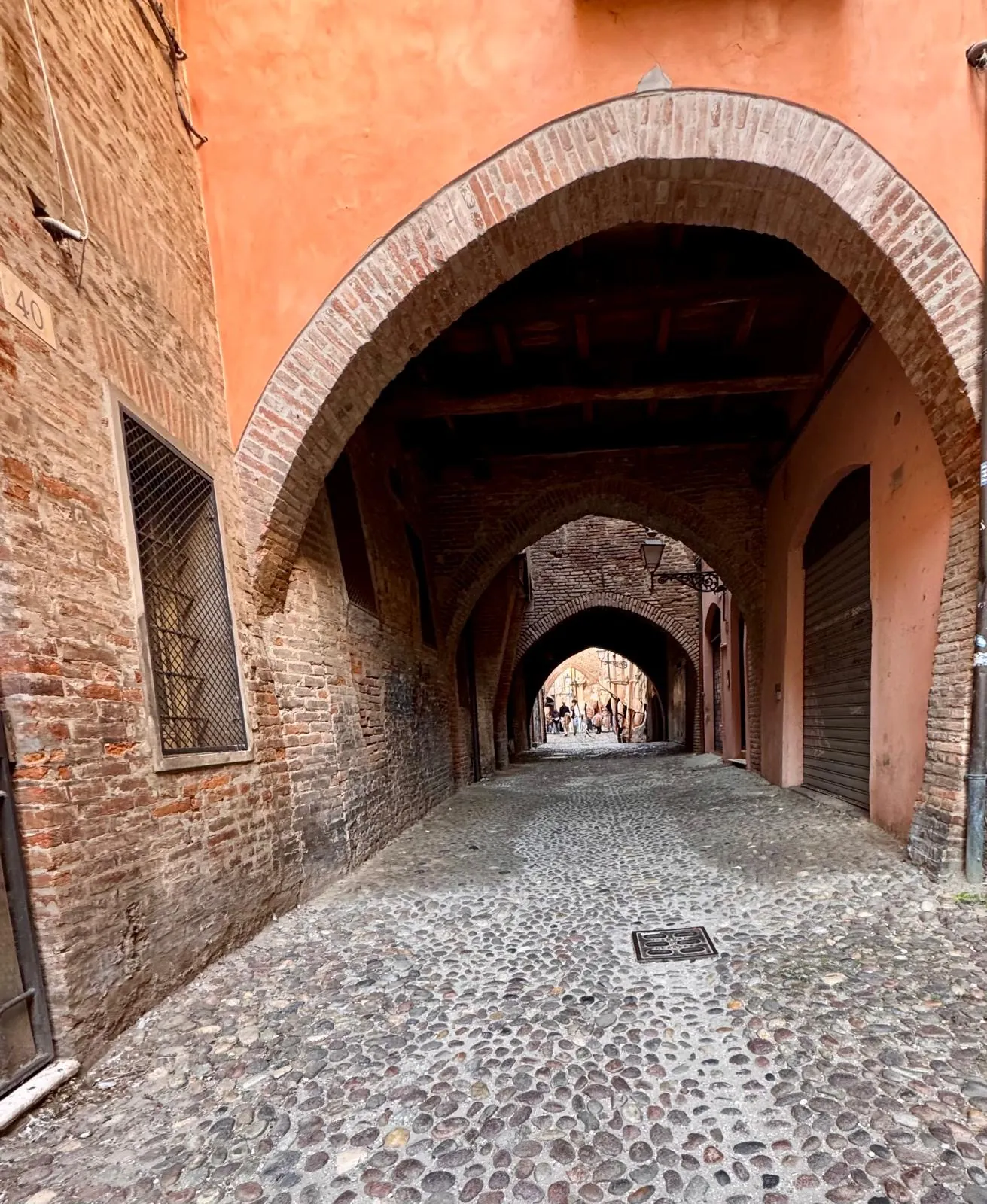
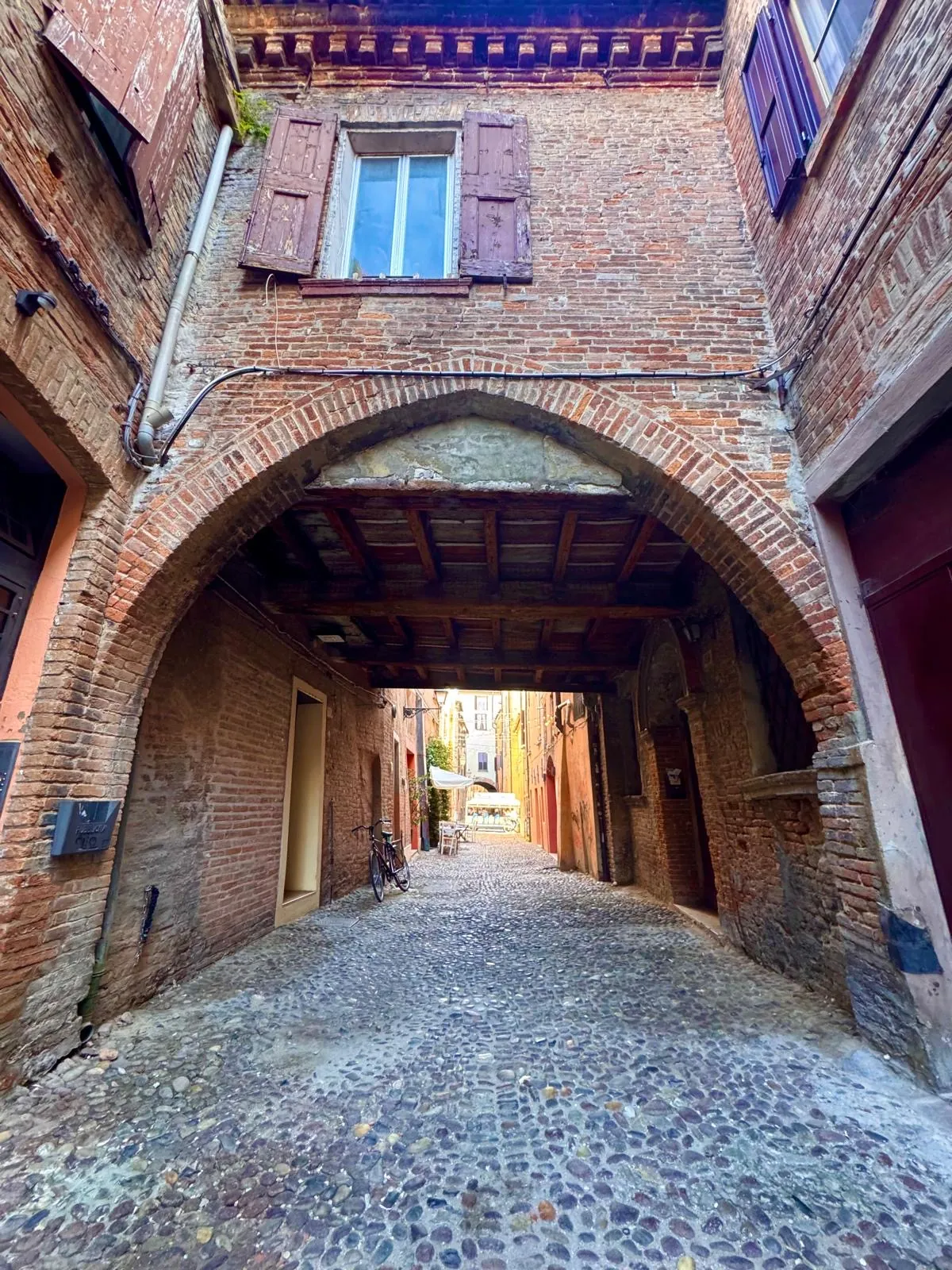
Here Ferrara changes its look: from the grand squares you move into a more intimate setting, between brick walls and stone paving with an uneven surface.
Accessibility · The cobbles of Via delle Volte
The paving is made of stones and is uneven. With my Triride All Road I had no difficulty on the stretch we covered. This refers to my own mobility aid: with a manual wheelchair or small front wheels, how it feels and how much effort it takes may be different.
Santa Maria in Vado, a stop from the outside
Before reaching Palazzo Schifanoia we went past the Basilica of Santa Maria in Vado, stopping to look at it from the outside. A short stop on our way to Palazzo Schifanoia.
Palazzo Schifanoia and the Hall of the Months
I chose to visit Palazzo Schifanoia partly because the visitor route is fully accessible. For the afternoon we had booked the 4 pm guided tour, planning to arrive by 3:45 to have a little margin before it began.
The name Schifanoia comes from the expression “schivar la noia”, “to escape boredom”: the palace was one of the so-called delizie estensi, residences devoted to leisure and to receiving guests, where the court could get away from the daily business of government and devote itself to entertainment and culture.
The palace tells the story of the Este family’s Ferrara through rooms and works linked to court life. Its most famous room is the Salone dei Mesi (Hall of the Months), with Renaissance frescoes arranged in three bands: at the top the gods and their triumphs, in the middle the signs of the zodiac with astrological figures, at the bottom Borso d’Este and scenes of court life. A story that links the passing of the year to the heavens and celebrates the rule of the lord of Ferrara.
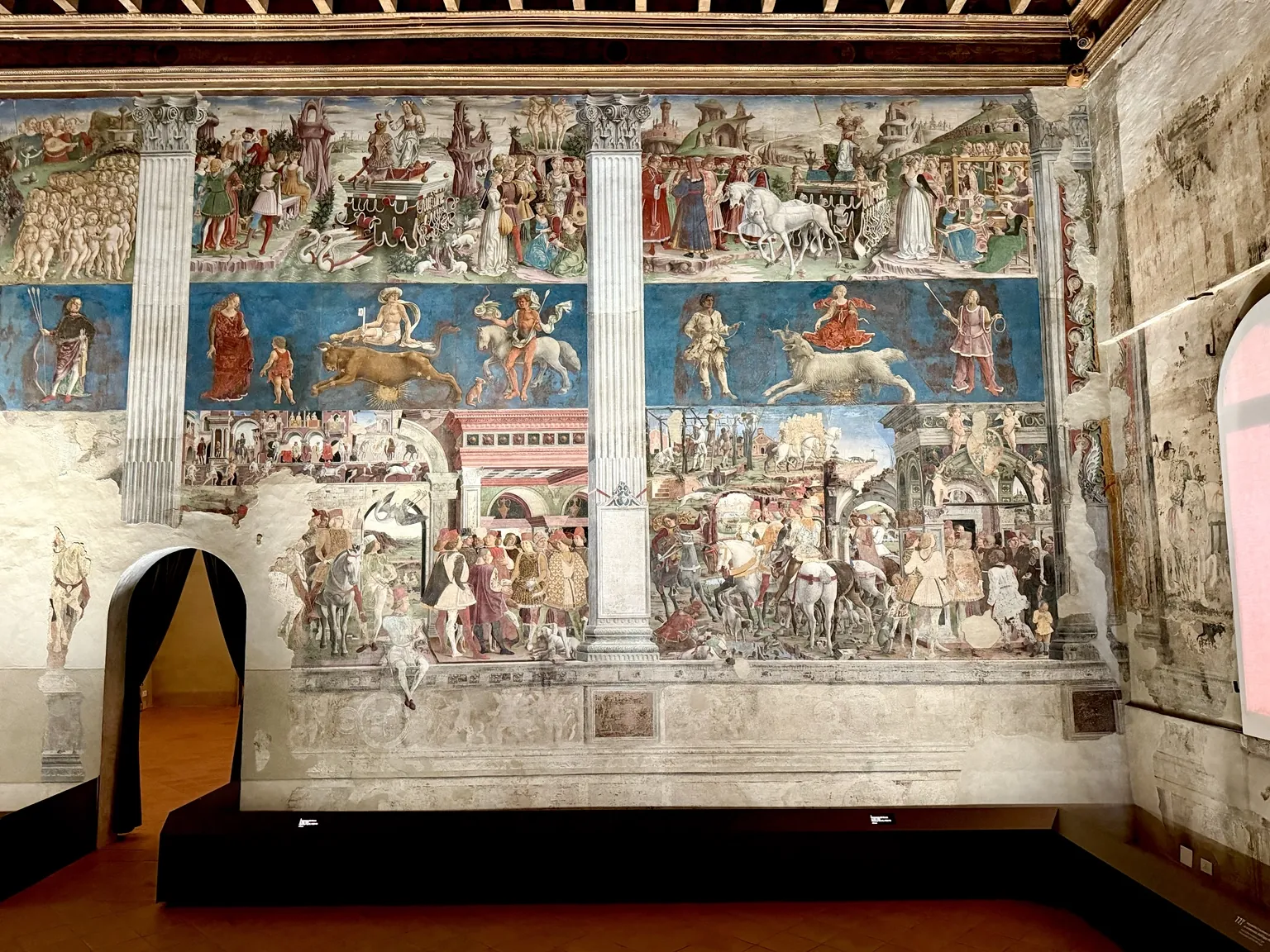
In the detail of the month of April, painted by Francesco del Cossa, Borso d’Este is shown handing a coin to the court jester Scocola, who stands in front of him with his back to us. Borso can be recognised by his rich golden robe and his headdress, among the courtiers and hunting dogs. A small episode of court life that helps to present the lord of Ferrara as a generous ruler.
During the visit, the guide also told us a more personal reading of the scene: the courtiers around Borso were supposedly his admirers, and the man in the foreground his favourite. A curiosity we heard during the explanation, which made us look more closely at the painted figures.
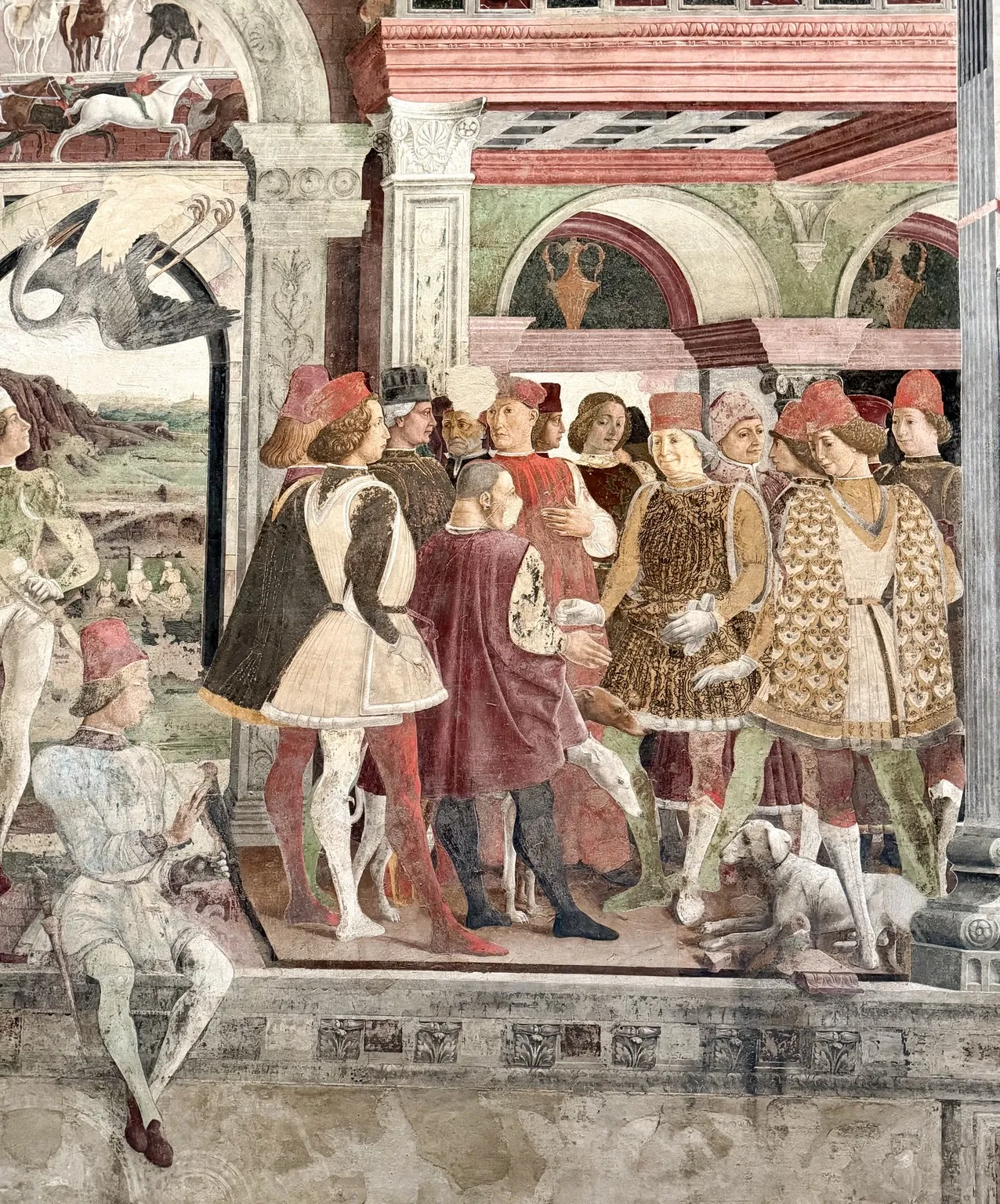
The guided tour took us through this heritage, among images full of details and meanings that deserve time and attention.
In the nearby Sala delle Virtù (Hall of the Virtues) your eyes are drawn up to the coffered ceiling, richly decorated with gilded stucco and paintings, a 15th-century work by Domenico di Paris. Among ornamental motifs and Este emblems, the decoration continues along the upper band of the walls with the figures of the Virtues: a reminder of the ideal qualities of a good ruler.
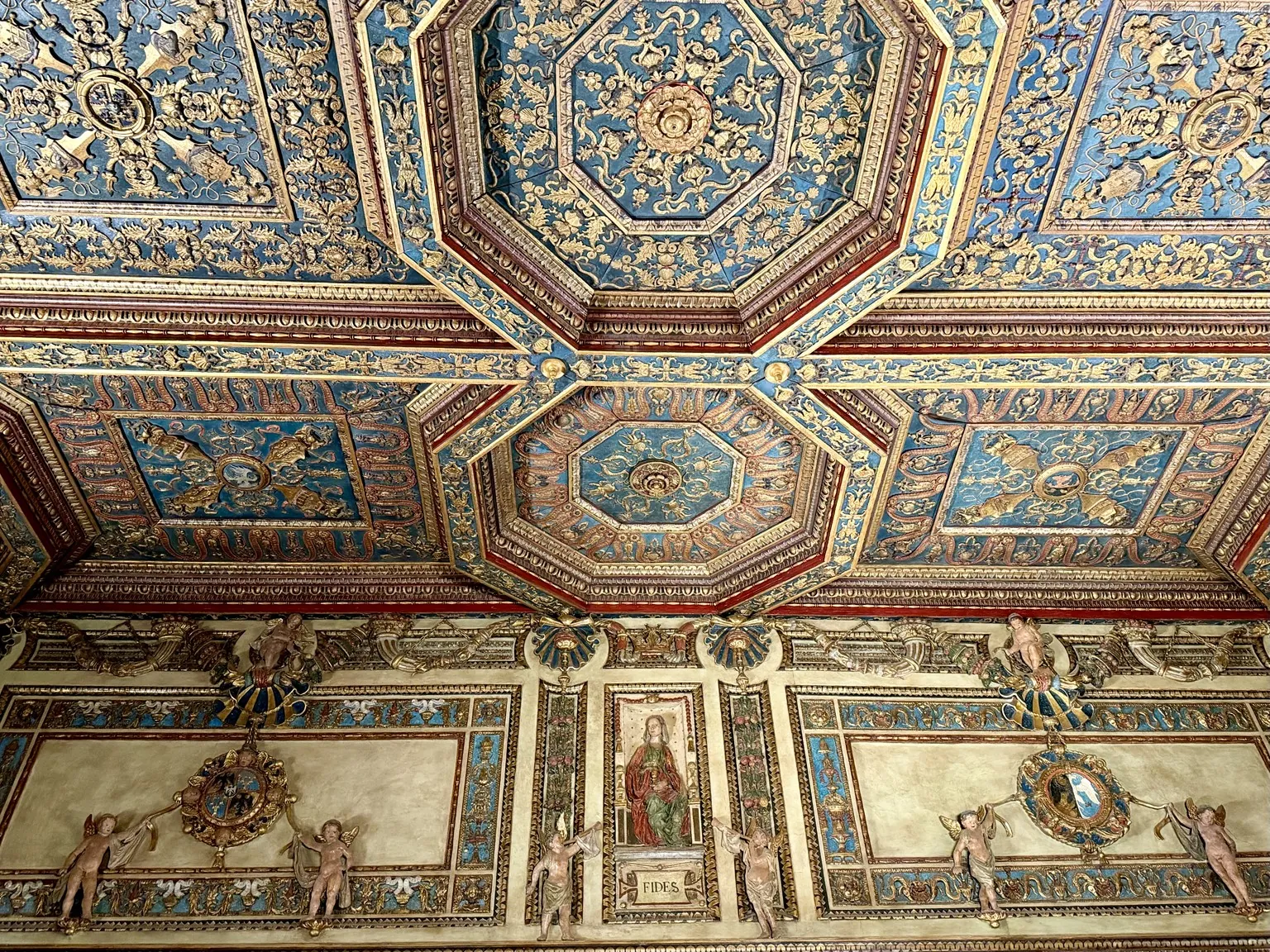
Accessibility · The visitor route
We visited the ground floor and then easily reached the first floor by lift. To get into the lift, because of the limited space, you need to unhook the Triride: you can leave it in the ticket office room and collect it at the end of the visit. I also personally checked that there is an accessible toilet.
Good to know before you go
Bookings and tickets: for our visit we booked both entry to the palace and the guided tour. Entry is free for the disabled person and their companion; the guided tour, however, is charged and paid for separately.
My “no surprises” summary
The things to remember, gathered here so they are easy to find.
| Item | Rating | Good to know |
|---|---|---|
| Getting to the old town and around it | 5 out of 5 | An easy cycle path from the car park to the centre; in the centre, traffic is restricted to authorised vehicles only. |
| Accessibility of Castello Estense | 4 out of 5 | Not fully accessible. We admired it from the outside. |
| Accessibility of Palazzo Schifanoia | 5 out of 5 | Lift between the floors, used after unhooking the Triride; accessible toilet. |
| Accessibility of the Cusina e Butega restaurant | 5 out of 5 | Accessible toilet, personally checked. |
| Ferrara specialities at Cusina e Butega | 5 out of 5 | Pumpkin cappellacci with knife-cut ragù, and salamina da sugo with mashed potatoes. |
Things to remember
- Car park used: Rampari di San Rocco, just outside the ZTL; 2 euros for the whole day. Whether parking is free with a disabled badge was not checked.
- Getting around the centre: an easy cycle path links the car park to the old town. In the centre, where traffic is restricted to authorised vehicles, getting around in my wheelchair with the Triride was pleasant and trouble-free.
- Via delle Volte: stony, uneven surface; no difficulty with my Triride All Road on the stretch we covered.
- Palazzo Schifanoia: fully accessible visitor route, with the ground floor and the first floor connected by a lift. To use the lift you need to unhook the Triride, which you can leave in the ticket office room and collect at the end of the visit.
- Bookings at Palazzo Schifanoia: you need to book both entry and the guided tour. In our experience, entry is free for the disabled person and their companion; the guided tour is paid for separately.
- Accessible toilets personally checked: Cusina e Butega restaurant and Palazzo Schifanoia.
Accessible toilets we found
- Cusina e Butega Accessible toilet, personally checked.
- Palazzo Schifanoia Accessible toilet, personally checked.
Overall experience
5 hearts out of 5Experience of 17 October 2026. The accessibility information refers to the route we followed in a wheelchair with the Triride All Road and to the personal checks described in the story. Conditions at the sites and services may change over time.